Pekingese Dog
First Impressions: A Delightfully Regal Silhouette
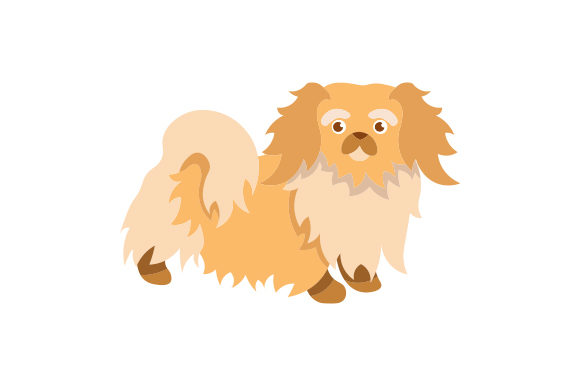
Opening the Pekingese Dog embroidery file, I immediately felt that quiet confidence this breed embodies—compact, dignified, and full of character. It’s not an overly cartoonish or exaggerated interpretation; instead, it leans into the Pekingese’s signature flat face, flowing mane, and compact posture with thoughtful proportion. The outline is clean but expressive—no unnecessary flourishes, just enough detail to read as “Pekingese” at a glance, even stitched small. That matters. As a designer who regularly sources embroidery files for client projects and my own craft business, I know how easily a dog design can tip from charming to generic. This one doesn’t. It feels like a design made *for* stitching—not just drawn and converted.
Real-World Test: Embroidering It on a Linen Tea Towel
Last week, I used Pekingese Dog for a limited-run batch of linen tea towels destined for a local boutique’s holiday pop-up. Why tea towels? Because they’re unforgiving—linen shifts under tension, thread shows every density shift, and customers notice if the face looks muddy or the fur loses definition. I chose a medium hoop size and paired it with lightweight cutaway stabilizer. The result? Crisp satin-stitched contours around the muzzle and ears, balanced fill stitch in the body that held shape without puffing, and subtle running stitch accents in the tail that added movement—not clutter. Customers loved it. One asked, “Is that *your* dog?”—a sign the design carries personality, not just pattern.
Where It Shines (and Where It Needs Care)
Pekingese Dog works beautifully across several real-world applications—but context matters:
- Custom apparel: Ideal for sweatshirt chest placements or tote bag front panels. Its compact vertical shape fits naturally above pockets or centered on sleeves.
- Baby embroidery: Gentle curves and no sharp points make it perfect for onesies or nursery pillows—just avoid dense fill in tiny sizes where stitch buildup could irritate sensitive skin.
- Embroidered patch: Clean outer edge means easy tear-away backing and crisp borders after cutting. Great for iron-on or sew-on applications on denim jackets or backpacks.
- Holiday embroidery & personalized gifts: Paired with a simple “Merry & Bright” script or stitched onto a velvet stocking, it reads as heirloom-quality—not mass-produced.
But here’s where attention pays off: On thin or stretchy fabric (like lightweight cotton tees), use a light fusible stabilizer *under* the fabric *and* tear-away on top—otherwise, the dense satin stitch around the face may pull or distort. And on dark fabric? Test your thread colors first. The design relies on contrast between facial features and body—so a charcoal gray thread on black fabric won’t read. Stick with cream, ivory, or true white for clarity.
What It Adds to Your Handmade Product—Beyond Stitching
A well-chosen machine embroidery design does more than decorate—it shapes perception. Pekingese Dog elevates a plain apron into something boutique-worthy. It gives a custom embroidered patch instant charm and recognition. For Etsy sellers, it’s the kind of detail that earns a “This seller really gets dogs!” comment—and those comments convert browsers into buyers. It supports brand consistency too: whether you’re using it across baby onesies, kitchen linens, or holiday ornaments, the consistent silhouette builds visual trust. And because it avoids trendy over-stylization, it won’t feel dated next season. That longevity matters when you’re curating design assets for long-term craft business use.
Practical Designer Notes Before You Stitch
Before sending Pekingese Dog to your machine—or listing it as part of a digital embroidery bundle—take these steps:
- Test on scrap fabric that matches your final project’s weight and texture—especially if working with textured weaves like terry cloth or bouclé.
- Check stitch density in the face area. If it feels heavy for your fabric, consider reducing density by 5–8% in your editing software—don’t guess, measure.
- Confirm hoop size compatibility. While the design is compact, double-check its maximum dimension against your most-used hoops—especially if you embroider caps or curved surfaces.
- Inspect small details at 200% zoom: Are the eyes defined? Does the nose shape hold up at 2.5" wide? If not, it may need minor cleanup before commercial use.
- Run black-and-white mockups on both light and dark backgrounds. Does the silhouette still communicate “Pekingese” without color cues?
- Use proper stabilizer—lightweight cutaway for stable wovens, adhesive+tear-away for knits. Skipping this step risks puckering, especially around the tight curves of the forehead and jaw.
- Verify licensing before selling finished items or digital embroidery files. Since the product lists SVG, PNG, EPS, and DXF formats, confirm whether commercial use is permitted—this is non-negotiable for Etsy sellers and small shop owners.
Final Thought: A Design That Earns Its Place
Pekingese Dog isn’t flashy—but it doesn’t need to be. It’s the kind of embroidery file that disappears into your product while making it better: recognizable without shouting, detailed without demanding perfection, and versatile without sacrificing breed authenticity. Whether you’re stitching it onto a baby blanket for a proud new pet parent or building a cohesive line of dog-themed craft business products, it delivers quiet professionalism. In a market flooded with generic animal motifs, that’s rare. And worth your time.