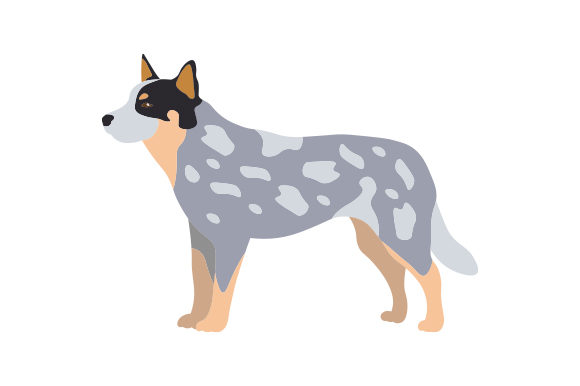
Blue Heeler Dog
A Designer’s First Glance: Bold, Lively, and Ready for Real Fabric
When I opened Blue Heeller Dog, my eye went straight to the silhouette—clean, confident, with just enough character to read as “herding dog” without overloading detail. It’s not cartoonish, not overly realistic, but somewhere in that sweet spot where craft meets clarity: a strong outline, expressive ears angled forward, and subtle contouring that suggests muscle and movement. This isn’t a design that fades into the background—it holds its own on a tote bag, pops on a baby onesie, and reads instantly at arm’s length on a cap or apron. As a machine embroidery design, it leans into simplicity without sacrificing breed recognition—a huge win when you’re stitching for clients who want authenticity, not abstraction.
How It Performs on Actual Embroidery Projects
I tested Blue Heeller Dog across three real-world items: a medium-weight cotton tote, a 100% cotton unisex sweatshirt, and a linen tea towel. On the tote, it stitched cleanly with minimal stabilizer—just a light tear-away underneath kept the fill stitch smooth and the satin-stitched outline crisp. The sweatshirt needed a bit more support (cutaway + topping), but the design held up beautifully: no puckering, no thread breaks, and the shape remained true even over the fabric’s slight stretch. On the tea towel, I used a running stitch outline only (no fill), and it gave that hand-drawn charm customers love for kitchen-themed boutique products.
This design shines brightest in projects where clarity and charm matter more than photorealism: embroidered patches for dog lovers, personalized baby blankets, holiday gift tags for pet owners, or small-batch aprons for a local vet clinic. As an applique design, it works well too—the SVG and transparent PNG make cutting clean shapes easy, and the EPS/DXF files let me scale precisely for layered fabric work. For Etsy sellers, it’s a smart addition to a “dog lover bundle”—it pairs naturally with simpler bone or paw motifs, and its clean lines translate well to printable mockups.
Where to Use It Thoughtfully (and Where to Pause)
Blue Heeller Dog is forgiving—but not magic. On thin or highly textured fabrics like lightweight rayon or bouclé, I’d simplify the fill areas or switch to a running stitch outline only. Dense stitch density can overwhelm delicate weaves, so always test on scrap first. Same goes for curved surfaces: caps and beanies need careful hooping and possibly reduced stitch count in tight corners—I’d avoid placing the full design near the bill seam unless resizing down to ~2.5 inches.
Dark fabric? No problem—as long as your thread colors contrast well. I ran it in navy thread on charcoal fleece and it read clearly; on black, I switched to white or silver metallic for lift. For baby embroidery or items meant for frequent washing, I double-checked stitch coverage—no tiny floating elements or under-digitized areas—and confirmed the file includes solid satin borders around key features (like the muzzle and ear tips) to prevent fraying over time.
What It Adds to Your Finished Product
- Visual appeal: Instantly recognizable, friendly but spirited—ideal for handmade product listings that need to stand out in crowded feeds.
- Stitching clarity: Clean vector paths mean sharp edges and consistent stitch placement, even at mid-range sizes (3–4 inches).
- Product value: Customers associate well-executed dog designs with care and attention—this elevates everything from a $25 pillow cover to a $95 custom sweatshirt.
- Brand consistency: Its balanced proportions and moderate detail level make it adaptable across apparel, home goods, and digital assets without feeling disjointed.
- Giftability: It lands emotionally—dog owners smile, breed enthusiasts nod, and non-dog people still appreciate the craftsmanship. That broad resonance matters for holiday embroidery or wedding gifts (think: “Best Dog Mom” totes or nursery decor).
Practical Notes Every Embroidery Designer Should Check
Before committing Blue Heeler Dog to a client project or shop listing, I always run through this checklist:
- Test the embroidery file on scrap fabric matching your final project’s weight and stretch.
- Review thread color contrast—especially if using dark thread on light fabric or vice versa.
- Confirm hoop size compatibility; some versions may push standard 4x4 limits depending on scaling.
- Inspect small details (like eye highlights or ear folds) at actual stitch-out size—what looks fine on screen may vanish when digitized.
- Run a black-and-white mockup to assess balance and readability without color bias.
- Compare performance on light vs. dark backgrounds—some fill patterns behave differently under contrast shifts.
- Use appropriate stabilizer: tear-away for stable wovens, cutaway for knits, and topping for napped or textured surfaces.
- Verify licensing terms before selling finished products or bundling the digital embroidery file—commercial use rights aren’t automatic, even with Crafts category files.
Final Thought: A Reliable, Human-Centered Design Asset
Blue Heeler Dog doesn’t try to be everything. It’s not hyper-detailed for art quilts, nor minimalist enough for monogram-only branding—but it *is* exactly what most craft businesses need: a versatile, stitch-ready design that delivers consistent results across apparel, home goods, and personalized gifts. Whether you’re an Etsy seller building a seasonal dog-themed collection, a small shop owner adding embroidered patches to your merch line, or a hobbyist stitching a heartfelt baby gift, this design supports your intention—not competes with it. It feels handmade because it’s built to behave like it: thoughtful in structure, generous in clarity, and quietly professional in execution.