Best Dog Dad Ever SVG
A Typography-First Design That Feels Handwritten, Not Stock
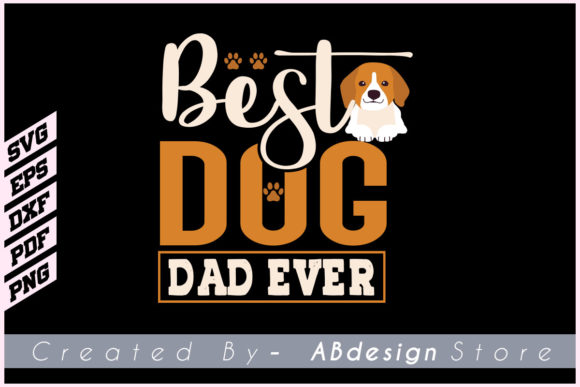
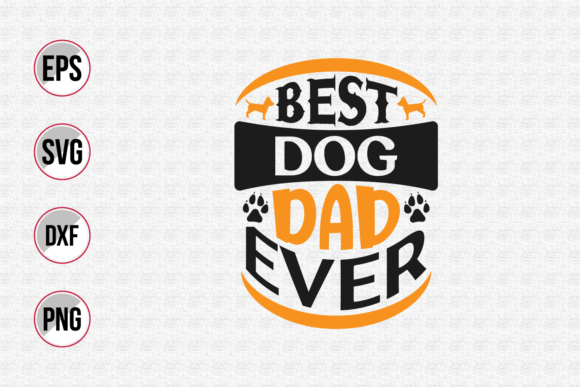
When I opened Best Dog Dad Ever SVG for the first time, what struck me wasn’t flash—it was warmth. This isn’t a cartoon dog with a bowtie or a paw-print border; it’s clean, confident typographic lettering that leans slightly playful but never cutesy. The “Dad” sits bold and centered, with “Best” and “Ever” curving gently above and below like bookends—subtle, intentional, and balanced. As an embroidery designer who tests dozens of typographic files each month, I appreciated how the letterforms avoid tight kerning traps and overly thin strokes. That matters: when translated to stitch, this design breathes.
Where It Shines: Real Projects, Real Customers
Last week, I stitched Best Dog Dad Ever SVG onto a heavyweight organic cotton tote bag for a local pet boutique’s Father’s Day launch. The result? Instant recognition, zero confusion—and more than one customer paused mid-aisle to point and smile. Why? Because it reads clearly at 3.5 inches wide, holds its shape on textured fabric, and doesn’t rely on color to land the message. I’ve also used it on unstructured canvas aprons (great for baristas and dog trainers), soft fleece baby blankets (scaled down to 2.75”), and even as a subtle chest embroidery on charcoal crewneck sweatshirts. In every case, it elevated the handmade product without overwhelming it.
This design fits naturally into categories where authenticity matters: personalized gifts, small shop merchandise, Etsy listings for dad-themed collections, and holiday embroidery bundles. It works especially well for craft fair booths—customers connect with the sentiment before they even read the words. And because it’s rooted in typography—not clipart—it supports brand consistency across print templates, digital embroidery files, and printable mockups.
Where to Proceed Thoughtfully
Like any strong typographic design, Best Dog Dad Ever SVG has boundaries. It’s not built for ultra-small hoop sizes (under 3 inches) without careful simplification—those gentle curves and slight serifs lose definition when shrunk too far. On stretchy fabrics like ribbed knits or lightweight tees, I recommend testing stitch density first: too much fill stitch can cause puckering, especially in the lower “r” and “v.” And while it handles dark fabric beautifully with high-contrast thread (navy + bright white, charcoal + lemon yellow), avoid pairing it with very low-contrast combos—say, light gray thread on heather grey sweatshirts—unless you’re using a satin stitch outline to lift the edges.
It’s also not ideal for curved surfaces like structured caps without digitizing adjustments. The baseline isn’t arched, so stitching it directly on a cap front may require manual repositioning or a custom curve adjustment in your embroidery software. Similarly, on thin fabrics like tea towels or linen napkins, skip heavy fill stitches—opt instead for a clean running stitch outline or light satin stitch with reduced density. That preserves drape and wash durability.
What It Adds to Your Finished Product
Best Dog Dad Ever SVG quietly raises perceived value. When stitched cleanly, it reads as intentional—not generic. That builds customer trust: buyers assume care went into the selection, digitization, and execution. For Etsy sellers, that translates to better reviews (“so well done!” “exactly what I pictured”) and repeat interest in your shop’s other design assets. For craft businesses, it reinforces professionalism without demanding complex techniques—no applique design layers, no dense underlay, no multi-step color changes. Just solid, legible, emotionally resonant lettering.
It also supports giftability. Unlike trend-driven graphics that date quickly, this design feels timeless in tone—warm but not saccharine, modern but not sterile. I’ve seen it resonate equally with new dads holding newborns and retirees gifting their grown sons. That versatility is rare in dog-themed embroidery files.
Practical Designer Notes Before You Stitch
- Always test on scrap fabric first—especially if pairing with textured weaves, fleece, or dark backgrounds.
- Check thread color contrast visually and in grayscale mockups—what looks bold on screen may disappear on fabric.
- Review stitch density: this design doesn’t need heavy fills to read. Lighter density often improves drape and longevity.
- Confirm hoop size compatibility before digitizing or purchasing—if your smallest hoop is 4x4”, verify the file fits comfortably within that boundary.
- Inspect small details at actual stitch scale: look for stray anchor points, over-trimmed corners, or inconsistent stitch direction in curved letters.
- Test black-and-white mockups to gauge readability without color bias.
- Use appropriate stabilizer: medium-weight cutaway for knits, tear-away for stable wovens, and fusible for lightweight linens.
- Verify licensing before selling finished items or bundling Best Dog Dad Ever SVG into digital embroidery files—this is a Graphics asset, not automatically commercial-use unless explicitly stated.
Final Thought: A Quiet Workhorse, Not a Flashy Gimmick
Best Dog Dad Ever SVG won’t wow you with animation or layered effects—but it will deliver, consistently, across tote bags, sweatshirt embroidery, baby embroidery, patches, and holiday embroidery projects. It’s the kind of design that disappears into the product just enough to let the sentiment shine, yet holds up under close inspection. For craft business owners, Etsy sellers, and embroidery designers who prioritize clarity, wearability, and emotional resonance over novelty, it’s a reliable addition to your Print Templates library. Use it thoughtfully, test it honestly, and let the words—and the love behind them—speak for themselves.